
Celebrating 120 years of the International Electrotechnical Commission, part 2: standards that changed industrial safety
Date: 07/07/2026 | By: IDEC HQ
In June 2026, the International Electrotechnical Commission (IEC) celebrated the 120th anniversary of its founding. To mark this milestone, we’re publishing a 3-part series of articles on the IEC: the first committees and standards, major publications over the years, and the global impact on industrial safety.
Part 2: IEC standards that changed industrial safety for the better
Part 3: IDEC’s contributions to international standardization and industrial safety
Examples of IEC standards that have changed industrial safety for the better
Safety standardization benefits everyone – especially workers, who enjoy constant reassurance that their workplace meets global health and safety benchmarks. Shared terminology and requirements simplify initial planning, and the long-term advantages of compliance include cost-effective operations, fewer accidents, easier maintenance, and higher productivity.
With thousands of standards to choose from, picking out IEC guidelines and requirements with strong positive impacts on industrial safety wasn’t easy. We’ve focused on standards relevant to different areas of machine safety and functional safety.
The list below reflects the variety of IEC standards, and the sheer number of things that systems designers and end users must consider during industrial safety risk assessments.
IEC 60204-1 (Safety of machinery - Electrical equipment of machines - Part 1: General requirements)
IEC 60204-1, as the ‘general requirements’ section of the series, covers the essentials for building safe, reliable systems, such as:
Physical environment and operating conditions
Incoming supply conductor terminations and devices for disconnecting and switching off
Protection against electric shock
Protection of equipment
Control circuits and control functions
Control functions in the event of failure
Operator interface and machine-mounted control devices
Conductors and cables
Wiring practices
Marking, warning signs and reference designations
Technical documentation
etc.
If you’re working with electrical equipment and you’re not sure where to start, then we suggest reading more about IEC 60204-1 requirements as the first step.
The IEC 60204 series has other parts that apply to specific types of machinery and electrical equipment.
IEC 60947-5-5 (Low-voltage switchgear and controlgear - Part 5-5: Control circuit devices and switching elements - Electrical emergency stop device with mechanical latching function)
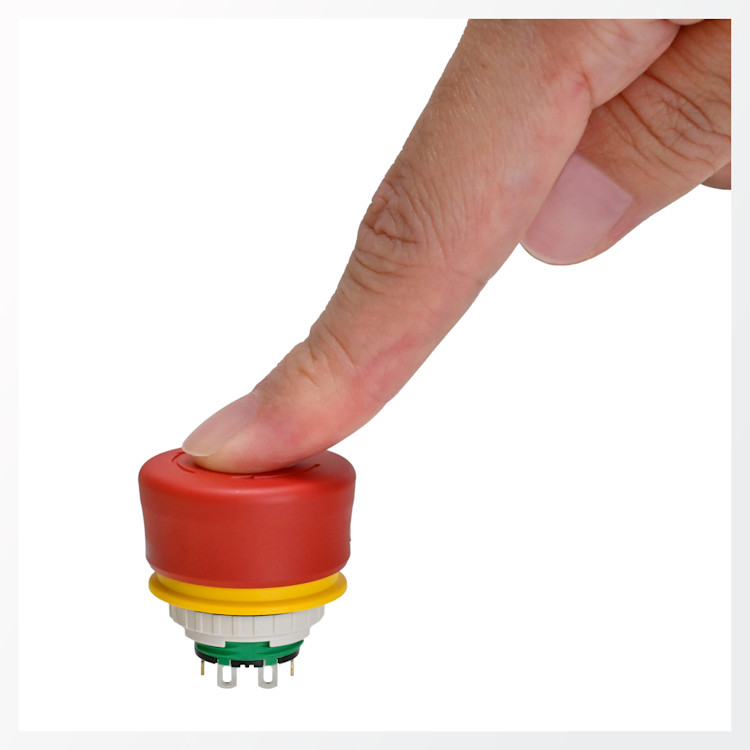
International safety standards for emergency stop switches are highly detailed and specific, and for good reason. This type of switch must be easy to see and quickly accessible in an emergency.
For example, the red button/yellow background combination is part of the requirements of IEC 60947-5-5 and other related standards. This highly visible color scheme is globally recognized and understood to represent e-stops, removing language barriers and increasing response times.
IEC 61496-3 (Safety of machinery - Electro-sensitive protective equipment - Part 3: Particular requirements for active opto-electronic protective devices responsive to diffuse reflection (AOPDDR))
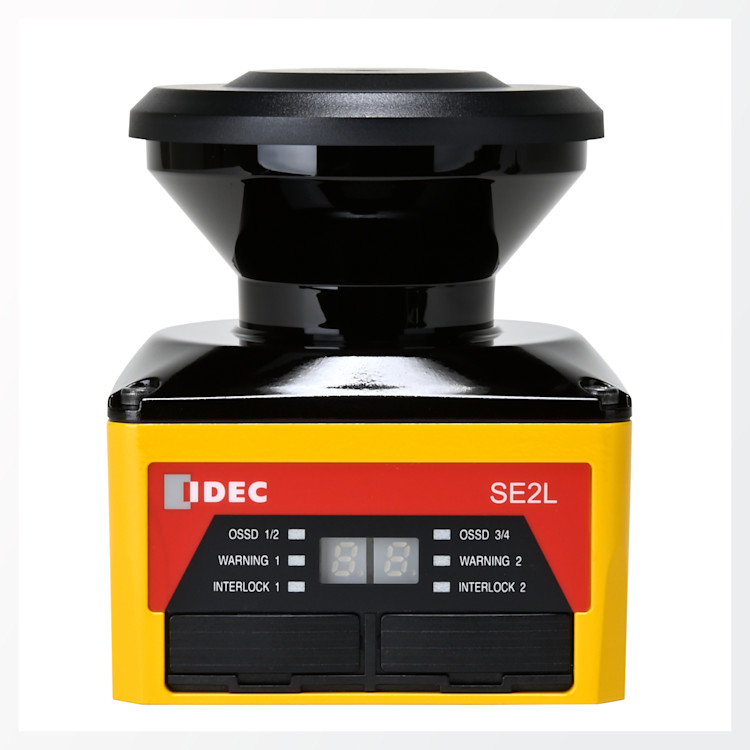
IEC 61496-3 “specifies additional requirements for the design, construction and testing of non contact electro-sensitive protective equipment (ESPE) designed specifically to detect persons or parts of persons as part of a safety-related system, employing active opto-electronic protective devices responsive to diffuse reflection (AOPDDRs) for the sensing function.”
AOPDDRs are devices with either:
1 or more detection zone(s) specified in 2 dimensions (AOPDDR-2D), or
1 or more detection zone(s) specified in 3 dimensions (AOPDDR-3D)
This definition covers safety laser scanners used to detect humans and objects (obstacles) in industrial environments.
It sounds complex, but IEC 61496-3 directs your attention to requirements that ensure you achieve a suitable level of safety-related performance for your application.
IEC 62046 (Safety of machinery - Application of protective equipment to detect the presence of persons)
The requirements outlined in IEC 62046 are for “the selection, positioning, configuration and commissioning of protective equipment to detect the momentary or continued presence of persons in order to protect those persons from dangerous part(s) of machinery in industrial applications.”
In other words, the standard helps you to determine: which types of protective equipment are suitable in different situations, when and where to use them, and how they should effectively function to keep workers safe.
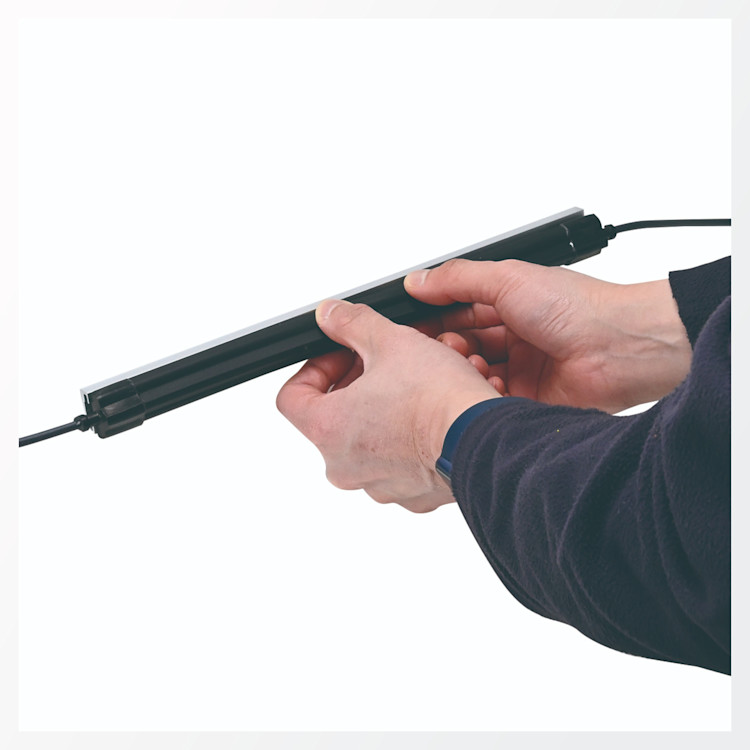
The ‘protective equipment’ covered by this standard includes pressure-sensitive mats, light curtains, and other light beam devices.
IEC 62061 (Safety of machinery - Functional safety of safety-related control systems)
Where IEC 61508 is the ‘main’ IEC standard for functional safety, IEC 62061 is specific to the machinery sector – simplifying overall understanding in this area.
It focuses on functional safety requirements and risks, related only to hazardous situations arising from the machine itself or from a coordinated group of machines.
IEC 62061 will take you through requirements and recommendations for designing, integrating, and validating a safety-related control system (SCS) for a machine. It covers planning and management of functional safety at the same time.
With this framework in place, the resulting control system has safety integrity and the ability to avoid or control systematic faults, a solid subsystem architecture, and full validation.
IEC 61131-2 (Industrial-process measurement and control - Programmable controllers - Part 2: Equipment requirements and tests)
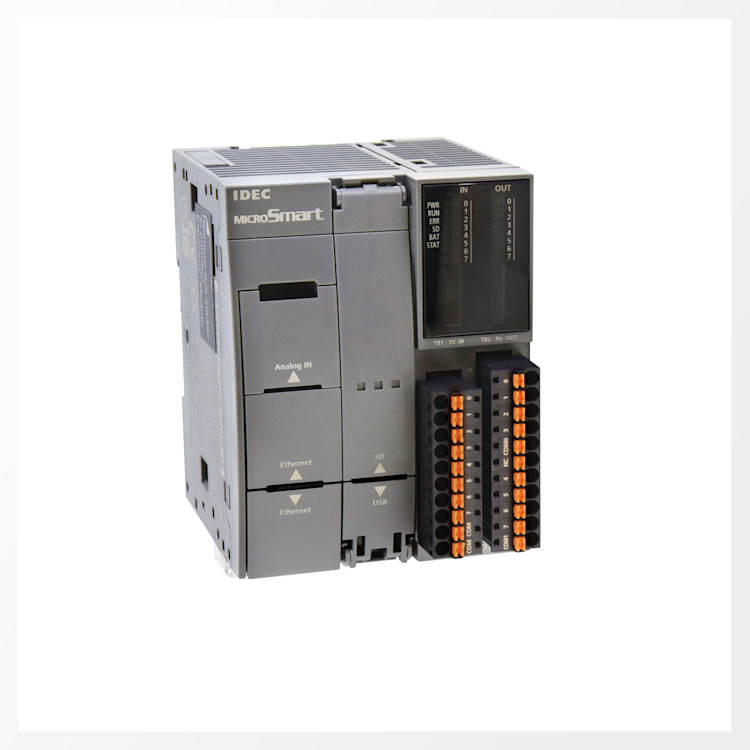
You might consider the PLC in your system to be much more of a control device than a safety device. The IEC considers PLC safety important enough that the IEC 61131 series of standards for PLCs has 10 parts (as of June 2026).
Part 2 provides requirements to confirm that a PLC can – and will – function as intended within a system. It covers the PLC’s operating temperature and humidity limits, resistance to shock and vibrations, digital and analog I/Os, and compatibility with other devices.
A PLC that meets these requirements – after thorough testing, as also outlined in the standard – will be a reliable, durable element of your control system.
IEC 61131-6 (Programmable controllers - Part 6: Functional safety)
Programmable logic controllers (PLCs) and their peripherals are defined in IEC 61131-1. Parts 2 to 5 cover equipment requirements, programming languages, user guidelines, and communications (in that order).
Industrial safety systems are built around PLCs. Any international standard that specifies functional safety requirements for the PLC serves to improve the whole system by default.
PLCs and peripherals that comply with IEC 61131-6 are classed as ‘functional safety programmable logic controllers’, and are suitable for use in electrical/electronic/programmable electronic safety-related systems.
International standards are made to be followed – in part 3, find out how IDEC contributes to standardization and high safety on a global scale
By developing harmonized, globally agreed technical rules and standards, the IEC continues working to simplify safety compliance for everyone.
In part 3 – the final article in this series – we’ll highlight our own contributions to a safer world. IDEC’s involvement with IEC standardization has continued for several decades. Learn more about our long-standing commitment to safety, and to supporting the IEC’s vital work.
We provide a wide range of help and resources:
If you have questions or suggestions, we're here to listen.
Our sales and support teams are on hand to help.
All the technical documentation you need.