
End-to-end traceability with RFID automation
Date: 22/01/2026
Throughout the year, we will share one customer challenge each month and show how IDEC helped resolve it. These real-world use cases demonstrate how our broad portfolio of solutions supports industrial applications. This month, discover how RFID enabled full traceability for a customer’s fuel distribution process.
The customer’s challenge:
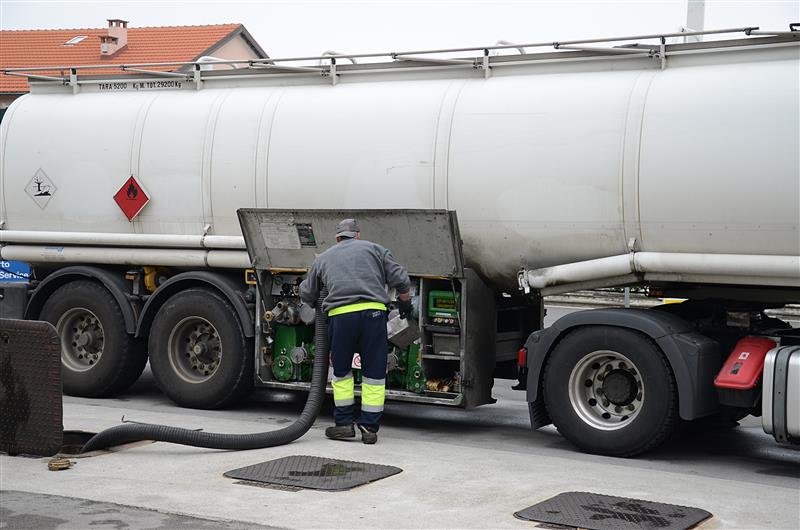
The existing process, within the distribution centre for the fuel, was not “controlled” and was reliant on the tanker driver and fuel dispenser to complete manual documents. This could give rise to errors in reporting and incorrect data used for financial control too. The client’s request was to provide a solution that provided control to the amount of fuel dispensed and, ideally, using weights & measures as a 2nd check and proof.
The initial system in place:
Our initial investigation which included a review of the existing site control system, and learning the process & methods being used during the tanker “loading” process allowed us to better understand how to tackle the issue.
The fuel distribution site had a control system installed (including PLCs & touch panels), it utilised weigh stations to “weigh-in” an empty fuel tanker, then for the filling process it measured the rate & flow of the dispensed fuel. Then finally, the full fuel tanker was weighed again; “weigh-out”; so the general weight of the fuel loaded could be calculated. However, each of these processes was manual with the weights and measures being entered onto a paper-based document. Of course, the risk or errors on entering or mis-reading written information was very evident.
The solution we provided:
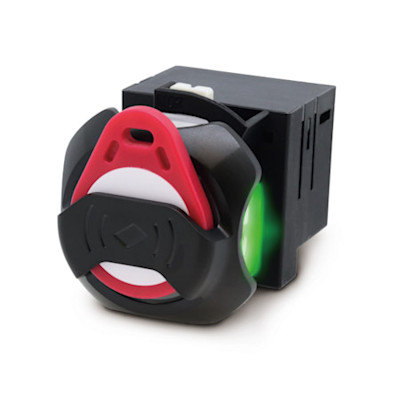
Automating the process, whilst using the client’s existing PLC, provided a “simple” adaptation. We determined the use of an available Modbus/TCP communication protocol could be used to talk to the IDEC RFID reader (KW2D series).
Each fuel tanker is issued with a unique RFID tag. On arrival at the distribution centre, the tanker is “weighed-in” and the driver presents the RFID tag to the reader – the UID of the tag is read and the weight of the tanker is logged.
Next, at the loading station, the RFID tag is placed into the RFID reader for the duration of loading. The appropriate or required amount of fuel is pumped (loaded) on-board the tanker. Once again, after loading has finished, the amount of fuel loaded onto the tanker can be logged and date/time stamped. Final step is to “weigh-out” the tanker. Ensuring all the data is correct and the final weight of the tanker is recorded.

Each fuel depot location used the following: 1 x KW2D-R at each of their weigh stations and 1 x KW2D-RH at each of the available loading stations, typically, 6-10 readers per.
Of course, each tanker was assigned its own tag & UID to ensure end-to-end traceability of fuel loading.
We provide a wide range of help and resources:
If you have questions or suggestions, we're here to listen.
Our sales and support teams are on hand to help.
All the technical documentation you need.