
Exploring the benefits of PCAP technology and tempered glass for industrial HMIs
Date: 03/02/2025 | By: IDEC HQ
HMIs used in industrial settings need to be durable, reliable, and easy to maintain. In harsh conditions – extreme temperatures, messy/dirty environments, etc. – a resilient touch panel keeps working effectively.
When comparing displays to use in these environments, a HMI with a projected capacitive (PCAP) touch panel and reinforced glass top is often the leading option. Let’s look at why.
PCAP touchscreen technology: established in some applications, continuing to evolve and advance in others
The use of PCAP technology in industrial HMIs has grown in recent years. Many people are familiar with the technology – PCAP displays are how we interact with smartphones, tablets, and other personal touchscreen devices.
The ‘capacitive’ element of PCAP touch panels enables them to recognize gestures such as finger swipe directions, and to sense multiple points of contact. The technology also enhances the sensing accuracy and responsiveness of displays.
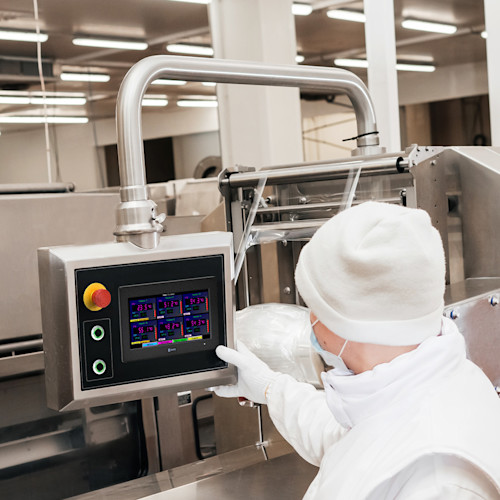
A barrier to entry for older versions of capacitive touchscreens was difficulty of operation when wearing gloves. In food production and other industries with strict hygiene standards, gloves protect both factory workers and the items they handle.
Newer PCAP displays work effectively with certain types of gloves. For example, IDEC FT series and HG series operator interfaces – all with a PCAP touch panel – can be used while wearing gloves less than 1.5mm thick.
(Note: touchscreen operation with gloves always depends on the glove material and operating environment.)
As a result of this and other technological advances, PCAP is now a preferred type of interactive display for industrial use.
Tempered glass: tough enough to withstand daily use, environmental factors, and regular washdowns
A protective glass layer is a key component of PCAP touch panels. It covers the sensor board and detection wiring, acting as an insulator. Overall, PCAP glass displays have fewer layers than traditional analog resistive plastic film tops.
A tempered glass top doesn’t interfere with the touchscreen – in fact, it enhances and protects the display. The many advantages of tempered glass include:
Durability
HMIs in work environments are put under literal stress and pressure with every tap on the touchscreen. In high-traffic areas of a facility, this type of repetitive wear and tear on the display’s surface can continue throughout the working day.
Compared to untreated glass, tempered glass can be significantly stronger. It’s a more robust material that holds up to heavy use in industrial settings.
Safety
Tempered glass is commonly used as safety glass. It doesn’t break easily – in our in-house testing, the FT2J’s glass panel passed a drop test with a 1kg steel ball.
(Note: steel ball dropped onto the center of the glass from a height of 60cm. Our in-house test results don’t guarantee real-world performance.)
If tempered glass does break, it doesn’t splinter in the same way as standard glass. It crumbles into smaller pieces with dull edges that are less likely to cause damage and harm.
Scratch resistance
In general, glass is more resistant to scratches than plastic and polycarbonates. This benefit is often cited by opticians, to help people decide which type of lenses to choose with their new pair of glasses.
Tempered glass is resilient enough that scratches are almost always attributed to a manufacturing defect.
Water resistance
When water hits a PCAP touchscreen, the size and force of the water droplets could cause accidental ‘touch’ inputs. Moisture on the screen can also reduce the device’s overall sensitivity and responsiveness.
IDEC HMIs with PCAP technology and tempered glass are IP66F/IP67F rated for resistance to water, oil, dirt and dust. We tested that resistance to IPX6 and NEMA4 standards, using direct high-power water jets.
UV resistance
The glass top on a PCAP touchscreen prevents fogging and discoloration (e.g. turning yellow) caused by long-term exposure to UV rays.
IDEC operator interfaces with PCAP technology also claim a wide operating temperature range – up to 60°C for the HG2J, and up to 55°C for the HG1J, FT2J and FT1J.
Easy cleaning
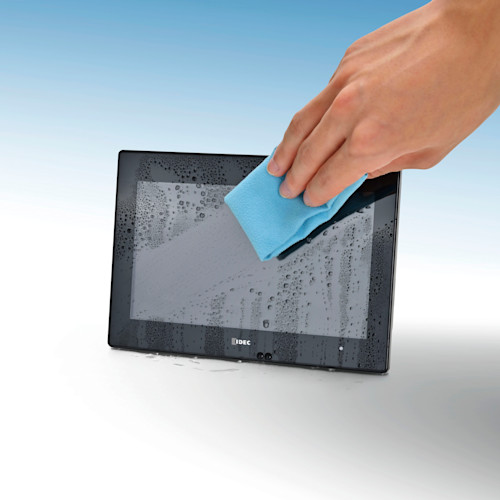
Clean workspaces are important for hygiene, efficiency, and employee well-being. When a touch panel is covered in fingerprints, dust, dirt, or all 3, you may also notice issues with device responsiveness.
Some touchscreens can’t be cleaned with dry cloths or harsh chemicals. Using the wrong cloth may leave lint and scratches on the display, and using chemicals could damage the device itself.
Tempered glass can be cleaned with a water or chemical washdown, or by using a cloth wipe soaked in water, alcohol, or disinfectant.
Industrial applications where tempered glass PCAP touch panels can shine
Heavy industries: PCAP touch technology isn’t affected by mechanical deterioration, and reinforced glass is robust in harsh environments.
Hot and cold working environments (including outdoor use): tempered glass can withstand high and low temperatures.
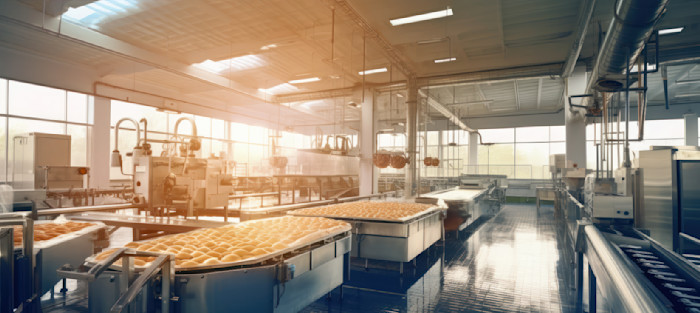
Food and packaging: displays can be washed with disinfectant or water sprays to maintain hygiene, without causing accidental ‘touch’ inputs.
Agricultural: glass panels left constantly exposed to natural light won’t fog or fade over time.
Durable, responsive, highly visible, efficient, and intuitive to use: PCAP touchscreen HMIs can offer you more than meets the eye
When PCAP touch displays were introduced with smartphones, they changed the way we interact with our personal devices. They have just as much potential to transform your working environment.
We provide a wide range of help and resources:
If you have questions or suggestions, we're here to listen.
Our sales and support teams are on hand to help.
All the technical documentation you need.