
Robot Safety Sensors | APAC
Robots can move safely at high speeds thanks to this human-sensing scanner
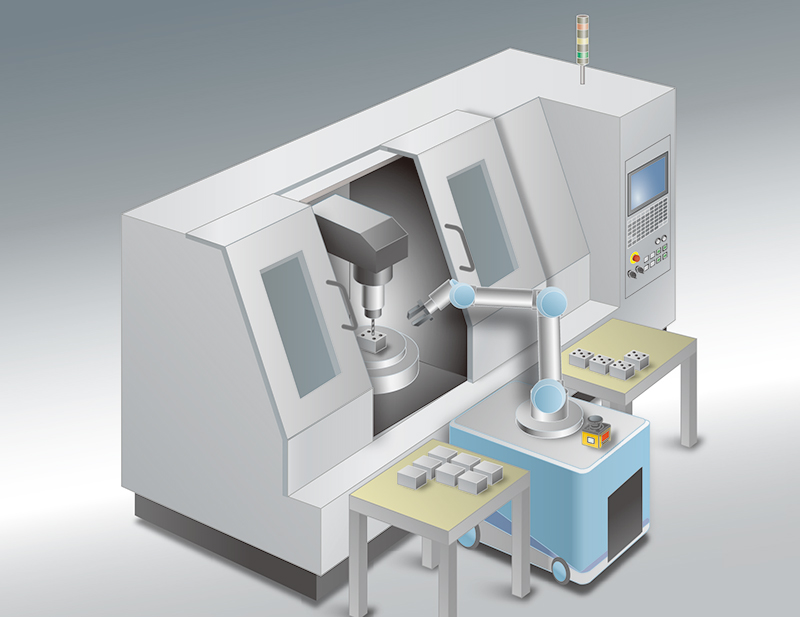
Robots operating at low speeds do not increase production efficiency
A trend on production lines where the product volume varies on a daily basis, such as metal parts machining lines at automotive factories, is the increasing use of human-robot collaboration. Sudden changes in the product amount can result in either an excess or shortage of workers. Replacing human workers with robots can eliminate labor spending issues and prevent production volume shortages.
However, this kind of human-robot collaborative work raises safety concerns. One countermeasure is for robots to operate at low speeds, in order to maintain the safety of human workers in areas without safety fences. As this measure has no positive effect on productivity, there were no real benefits to introducing high-cost robots in such cases.
As industrial robot manufacturers learned more about these issues at production sites, they became more concerned about whether they can develop robots capable of working in environments where humans are present and maintain both safety and productivity.
A human presence sensing scanner can contribute to both productivity and safety
How can we support customers in increasing their productivity while maintaining safety? IDEC has many years of experience in resolving production site issues. We recommend using a system that changes a robot's operating speed whenever a human presence is detected.
By using an IDEC SE2L series safety laser scanner with a collaborative robot, the robot can be switched to a low speed or stopped when a human is detected within sensing range. If no humans are nearby, the system allows the robot to continue operating at high speed (maximum productivity).
It is also possible to adjust the distance at which a human presence is detected and lower the speed or stop the robot accordingly. For example, the system can be set so that robot operation switches to low speed when a human is detected within a 3-meter radius, and the robot is stopped when a human is detected within a 1-meter radius. These settings offer flexibility of use to match the applicable production process.
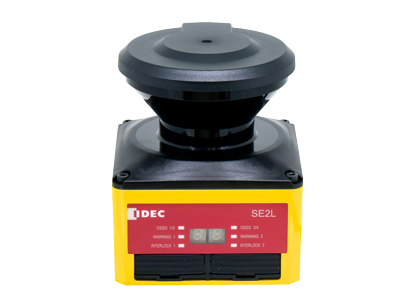
Contact IDEC for advice on safety measures in human-robot collaborative environments
As the safety specialists, at IDEC we are dedicated to ensuring safety at a wide variety of production sites. We use our experience and know-how, accumulated over many years, to focus on collaborative safety at production sites in order to provide numerous safety products for human-robot collaboration. Please contact us if you have any questions or concerns about robot safety, so that we can advise you on how to increase productivity at your work site while maintaining safety.
We provide a wide range of help and resources:
If you have questions or suggestions, we're here to listen.
Our sales and support teams are on hand to help.
All the technical documentation you need.