
Modern machines need more than control: how CODESYS® helps to keep systems connected and in motion
Date: 27/11/2026 | By: IDEC HQ
Loading...
In simpler times, PLCs had a simpler job: they monitored inputs and controlled outputs. For machine builders and systems integrators, today’s reality is more complicated.
Machines, robots and other devices continue to grow in sophistication and capability. They often communicate with the cloud, building management systems, remote monitoring tools, and other platforms.
Using wider system connectivity, your equipment generates and shares more data – in real time. You can only use this information to optimize processes and performance if you can access it in the first place.
In addition, equipment also operates and moves differently than before. Operators need advanced control functions to coordinate with multiple devices and stay in sync – without increasing overall complexity or the number of separate system elements.
What if connectivity is your system’s biggest bottleneck?
Connect your machines to the data management layer with CODESYS
Now that modern equipment can send information to the management layer of your system, it’s easier to use for monitoring, analysis, and optimization.
However, machine data is only useful to the people who can view and interpret it. Manufacturers looking to use this data for decision-making and performance adjustments are seeking the simplest way to do so.
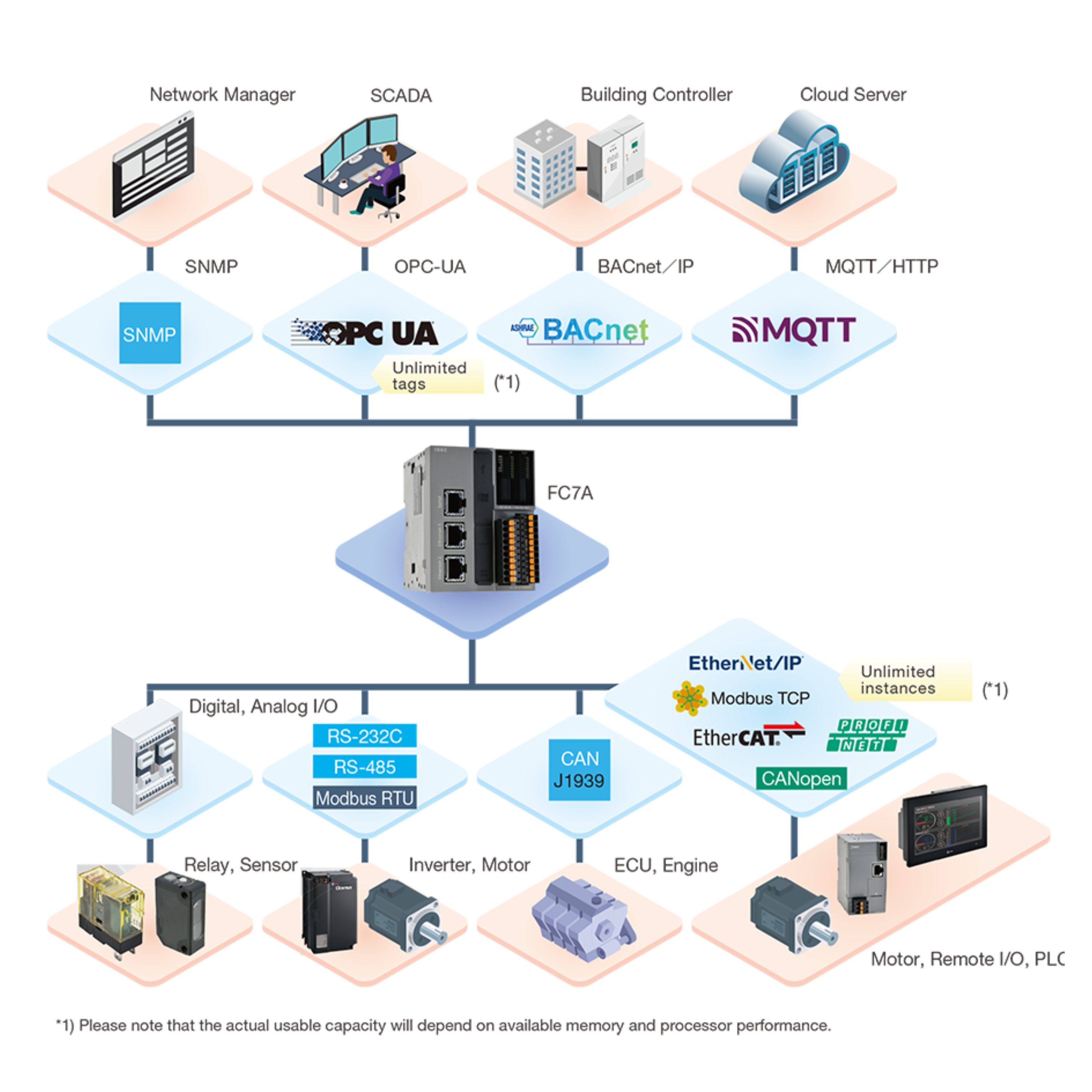
We previously introduced CODESYS as an open PLC programming platform with lower complexity. A major strength of CODESYS PLC software is support for IT and IIoT communication protocols, sharing information beyond the machine-level control layer (OT) to the system management layer.
Some examples:
HTTP/HTTPS: communication between the PLC and cameras, application software, robots, and/or AGVs.
MQTT: communication with cloud platforms.
SNMP: communication between the PLC and other network devices.
OPC-UA: communication with SCADA software.
Having this data on hand helps you analyze it in more detail and take action.
Use CODESYS SoftMotion to simplify communication, control, and compliance
Data management is only part of the challenge in automation system control and management. The other element is motion control, which also requires effective connectivity with equipment.
Conventional industrial motion control architecture involves more devices: specialist hardware, and a separate controller. Systems integrators spend more time and effort making sure these parts are reliably connected.
The CODESYS SoftMotion software package integrates these functions, keeping things simple to streamline device connectivity.
SoftMotion brings motion control functionality into the CODESYS development environment, significantly lowering barriers to entry. You don’t need separate hardware and software for PLC logic and motion tasks – in effect, your PLC becomes the motion controller.
Using CODESYS SoftMotion’s PLCopen-compliant function blocks means that motion control programs are reusable with different motor drivers. This compatibility with multiple servo and stepper motor drivers – commonly used for robot motion control – makes it easier to customize code for your device communication needs.
Engineers can handle synchronized multi-axis control and advanced motion requirements using fewer devices, and using familiar development and programming workflows.
Make the most of CODESYS capabilities with the new IDEC FC7A PLC
For users seeking greater connectivity, the upcoming IDEC FC7A PLC is an attractive and highly competitive option.
Establishing and maintaining device connectivity may pose a risk of system bottlenecks, depending on your configuration – but it doesn’t have to. The FC7A’s wide-ranging compatibility with network protocols, IT protocols and equipment helps to cover your bases. These include cross-platform data transfer methods such as OPC-UA, and online remote monitoring tools such as WebVisu and HTTP/HTTPS.
Every version is powered by CODESYS Runtime, giving you quick access to CODESYS functions and flexibility integrated with the PLC. Set up and start coding at your own pace with a lower barrier to entry, using any of 6 programming languages – including 5 supported under the IEC 61131-3 international standard.

FC7A PLC with CODESYS (Standard)

FC7A PLC with CODESYS (Motion)
FC7A Motion: connectivity and motion control in a single unit
When you select the FC7A PLC, you have a choice of models that provide a balance of built-in I/Os, network compatibility, and specific functions for your application.
The FC7A Motion version comes with CODESYS SoftMotion pre-installed for motion control. Develop control functions for robots and other industrial equipment in the same environment you use for PLC programming, to save time and resources.
Working with multiple devices and drivers, and on multi-axis controls, never feels like multi-tasking. A dual-core CPU and 1.2GHz processor work hard to handle the additional load.
IDEC FC7A with CODESYS: enjoy higher capability and lower complexity
By combining IT connectivity and motion control capabilities in 1 PLC, the FC7A will support manufacturers in expanding their production and automation systems and enhancing device communication. You can also benefit from lower costs of additional equipment and licensing costs, and fewer complications during setup and integration.
The IDEC FC7A PLC with CODESYS is scheduled for global launch by early 2027.
It arrives onto the market with technical support immediately available to users. IDEC is also launching specialist CODESYS tutorials and training, to make sure every customer can get the most out of the FC7A.
What’s next: our CODESYS-based PLC makes its full debut
Our final preview article in this series will complete our introduction of the new FC7A, and of the comprehensive support IDEC can provide.
If you’re already curious about the new IDEC FC7A PLC with CODESYS, please get in touch with your regional IDEC sales team.
We provide a wide range of help and resources:
If you have questions or suggestions, we're here to listen.
Our sales and support teams are on hand to help.
All the technical documentation you need.