
Materiality
Our Long-Term Vision

Materiality of IDEC Group
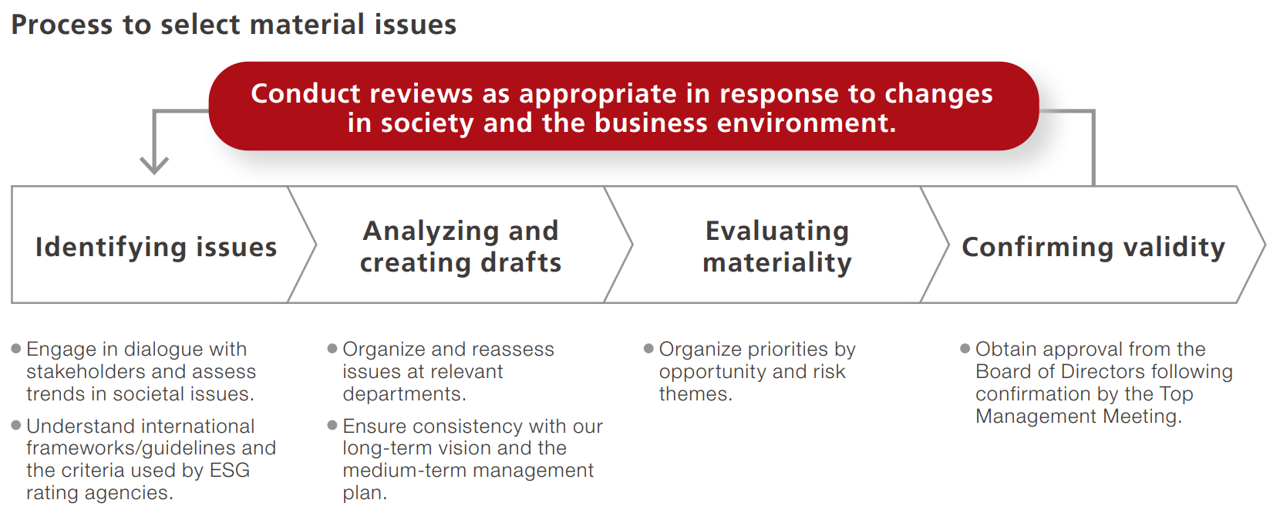
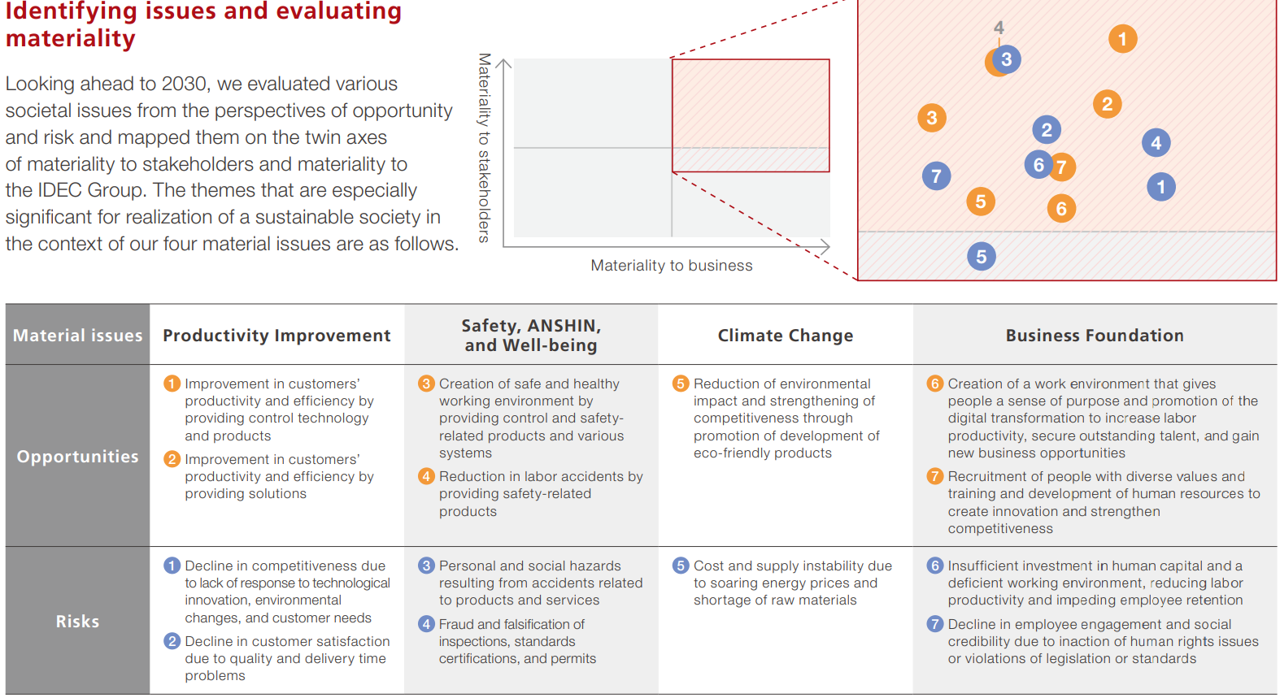
Along with formulating its long-term vision for 2050 and interim vision for 2030, IDEC reviewed material issues, incorporating enhancement of its human capital and governance under the heading “business foundation”. IDEC again reviewed some of its material issues in light of the external environment and other factors and, in addition to adding respect for human rights in 2024, also changed its interim vision for 2030.

Materiality and Sustainability KPIs
■Productivity Improvement
Vision for 2030:
•Contribute to improving the productivity and efficiency of our customers and society around the world by providing the IDEC Group’s long-cultivated control technology, products, and system solutions.
Sustainability KPIs | FY2025 results | FY2026 results | Targets achieved of FY2026 | FY2026-2028 Targets (based on the new medium-term management plan) |
Solution sales ratio | 10% | 12% | 15% or more |
■Safety, ANSHIN, and Well-being
Vision for 2030:
•Realize the optimum environment for both humans and machines to resolve societal issues to create safe and comfortable environment and achieve healthy, happy, and vigorous lives.
•Improve safety, productivity, and well-being through technology development, human resource development, management, and rulemaking.
Sustainability KPIs | FY2025 results | FY2026 results | Targets achieved of FY2026 | FY2026-2028 Targets (based on the new medium-term management plan) |
Safety business sales (vs. FY2025) | 10.9 billion yen | 12.9 billion yen | 1.5x or more | |
Frequency rate of industrial accidents*1 | 0.68 | 0 | ✓ | 0 |
■Climate Change
Vision for 2030:
•Contribute to reduction of the environmental impact of customers and society through the use of the IDEC Group’s technologies and products.
Sustainability KPIs | FY2025 results | FY2026 results | Targets achieved of FY2026 | FY2026-2028 Targets (based on the new medium-term management plan) |
Sales of enhanced eco-friendly products | 2.1 billion yen | 3.5 billion yen | 8.2 billion yen |
•Reduce CO2 emissions through the in-house use of renewable energy.
•Environmental disclosure and collaborative engagement with stakeholders.
Sustainability KPIs | FY2025 results | FY2026 results | Targets achieved of FY2026 | FY2026-2028 Targets (based on the new medium-term management plan) |
Reduction ratio of CO2 emissions (Scope1&2, vs. FY2020) | 28.4% | 29.5% | 35% | |
Supplier engagement ratio | ― | 35% | 80% |
■Business Foundation
Vision for 2030:
•Ensure a thorough understanding of ‟The IDEC Way” and stimulate the company by creating an attractive work environment that gives employees a sense of purpose.
•Promoting Diversity, Equity & Inclusion (DE&I) and fostering talent that creates new value and innovation through increased investment in human capital.
Sustainability KPIs | FY2025 results | FY2026 results | Targets achieved of FY2026 | FY2026-2028 Targets (based on the new medium-term management plan) |
Engagement score | ― | ― | Set KPI after the global engagement surveys in FY2027 | |
Ratio of males taking childcare leave*1 | 92.3% | 100% | ✓ | 100% |
Ratio of employees with disabilities (Japan) | 3.1% | 3.3% | ✓ | 3% or more |
Ratio of female managers*1 | 9.7% | 11.9% | 12% or more | |
Average training costs per person*1 | 55,000 yen | 98,000 yen | ✓ | 70,000 yen or more |
•Conduct business with the highest ethical standards, respect human rights both at our company and in the value chain, and further strengthen corporate governance and compliance.
Sustainability KPIs | FY2025 results | FY2026 results | Targets achieved of FY2026 | FY2026-2028 Targets (based on the new medium-term management plan) |
Human rights and compliance training attendance rate (Japan) | 100% | 100% | ✓ | 100% |
Number of serious legal violations | 0 | 0 | ✓ | 0 |
Number of improvement items identified through Board effectiveness evaluations (YoY)*2 | 44% of items below industry average | 41% | ✓ | 20% or more |
Sustainability engagement ratio with suppliers*3 | 100% | 100% | ✓ | 100% |
Audit and follow-up rate for suppliers with low SAQ scores | ― | 100% | ✓ | 100% |
*1 IDEC unconsolidated *2 Definition has been revised from FY2026 *3 Sustainability engagement ratio: SAQ response ratio